

The impact of the Iranian War, what Reform is not, casting about for crumbs: levels to think about buying.
How bad?
The War has few impacts on the USA: like any bombarding fleet, it can after all, just sail away. The bigger impacts are on the Gulf itself, and Asian oil importers.
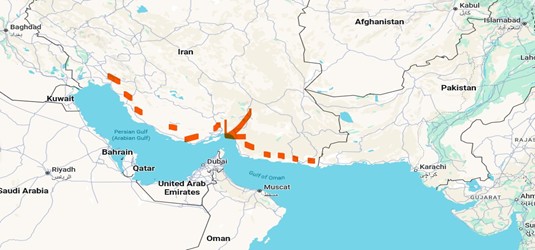
It is also clear the US will not invade. Nor will the Iranian people revolt.
The bear case assumption is that a semi-permanent closure of the Strait locks in all those hydrocarbons. Yet the Russian gas experience says within six months, for various reasons, including diversion, demand suppression or substitution, it eases.
Three figure oil going into next autumn, is therefore not on my mind.
The panic seems to be, not that 90$ oil is bad, but that it stops Central Bank easing. That to me is quite a short-term issue. I see a pause, not a raise.
Reform reformed
Reform is changing before our eyes, and its power (or lack of it) will soon be visible in the local elections. What Reform was a year ago, it certainly isn’t now.
Reform is seen as right wing – it is not just that, it is populist. Just as the Tories are not just right wing, they are elitist. And it is the populist vote, the anti-establishment one, that matters. But now those voters have a new alternate home, in the Greens.
I suspect 2025 was Reform’s high-water mark. A perfect patch of collapsing major parties, Labour more so than Tory, who had collapsed a year before. The Tory residue are still seen as the landlords and toffs, Reform’s impoverished amateur agitators want none of them,
What are populists? Well, they’re not rich, but not welfare dependant either. A kind of sour envy qualifies, a feeling the world is unjust, and a snarling hungry dog attitude, to the robbing of their feed. They are close too to the earth, their place, not widely mobile, and very sensitive to its loss or degradation. Both The Greens and Reform are in that sense conservative, change resistant.
Do policies matter to populists, or is “one of us” more important? Both sets of supporters can vote for some right old nonsense. Does governing competence count? I doubt it; protest and prefect are different roles. Populists are voting machines, not ruling ones.
There was a lot of excitement last summer, but less so now, I don’t see Reform exceeding expectations, the devolved elections voting systems won’t favour them; I am not expecting a triumph there.
Oddly, Reform HQ is funding by-elections, for local authorities that will be abolished next year, which is pointless, but creates momentum. But they are not (yet) funding Westminster candidates for 2029, even in their top two hundred target seats. Odd.
Each potential MP is on the hook for £50,000 at least, while the party still obsesses about finding the deposit of £500. They scramble to replicate the old party’s databases and apps, little realising they are dud, in this new fluid five party world, or that social media is cheaper. Good populism, bad politics.
London town
So, Reform will take local election seats, of course, so will the Tories. These are seats last fought in 2022, as Boris imploded. In London, with 1,800 seats, almost 1,200 held by Labour, the Tories should take 200 back (but are cautiously predicting half that). Reform, leading national polls still, should collect as many, if not more. Between them the two rebel parties should take half the Labour seats. Labour is facing a dark night, but perhaps not as dark as Starmer’s foes hope.
One of the advantages on the Left, is their common cause on major issues, more welfare, Gaza, even NetZero. This gives them a natural meeting place, to structure potent tactical voting.
The Right does not (yet) have that, which is a weakness.
Not far from the Snipe’s marsh, up in the High Cotswolds, a recent by-election saw a three-way fight, the ‘Right’ easily got over half the vote. But the ‘Left’ united behind the LibDems, who took it, and the Labour vote was at the spoilt ballot level.
Where is the market floor?
Buying levels? When it turns the relief rally will be fierce and fast.
The diversification trade, out of high-priced US stocks, is now all about liquidity, to redeploy. That’s why so many non-US markets and liquid assets sold off hard. The marginal diversifying global buyer has vanished.
So, where would I consider buying? Any fund manager has these on a white board, they are pure instinct, looking at charts in the main, of no validity. Certainly not signals.
On the FTSE 100, I have 9,500 as interesting, if it holds for a few days; but my ‘all in’ buy level is lower, back at 8,500. It is 10,000 now. Quite a big drop.
On the NASDAQ I look at 21,000, if it holds for a while, or 19,000 as the lower level, it is below 22,000 now. After six months going sideways, both of those ledges are not that far down.
While the S&P is also tight, now at 6,500, if it holds, 6,000, with an imperative down at 5,500.
I have no feel for other markets; I am not sure they matter much presently.
The long goodbye
In Powell’s last scheduled press conference, this week, he mournfully mentioned the perfection of the outcome of current US policies. US productivity growth remains unexpectedly high, has been for a few years, with productivity growth now running at 2%, after a 11% upgrade, the highest level since 2016, and a number we would die for.
While the US labour market, after all that has been thrown at it, is stable, wages still growing ahead of inflation, employment flat. The dollar index has also strengthened, bearing down on imported inflation.
The US is a net oil exporter too. The politics maybe fetid, but the economy looks oddly OK.
Happy Holidays. We return on April 12th.